 XINWU DISTRICT, WUXI
 WUXI NATIONAL HI-TECH DISTRICT
XINWU DISTRICT, WUXI 
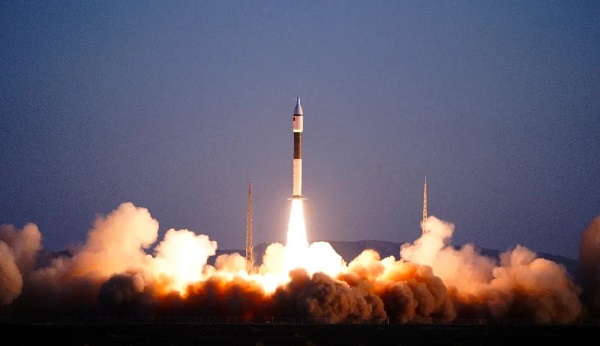
A Kuaizhou-11 Y8 carrier rocket lifts off successfully from the Jiuquan Satellite Launch Center. [Photo/WeChat account: xinwu_wx]
A Kuaizhou-11 Y8 carrier rocket lifted off successfully from the Jiuquan Satellite Launch Center recently, placing the DEAR-5 spacecraft into orbit as planned.
Among the mission's scientific payloads are four categories of research samples provided by Tyee Space Biotechnology, a company based in Wuxi Nation Hi-Tech District, also known as the WND. The samples include probiotics, yeast, edible fungi and medicinal plant seeds, which will be studied under extreme space conditions such as intense radiation, microgravity and sharp temperature fluctuations.
The research aims to examine how space environments affect microorganisms and seeds, supporting advances in space biology as well as innovation in fields including medicinal-food products and synthetic biology.
Tyee Space Biotechnology brings extensive experience in space-based microbial research, with well-established capabilities in pre-flight selection and post-flight screening and breeding. The company has built a comprehensive system covering space missions, the functional evaluation of strains, intellectual property protection and participation in industry standard setting.
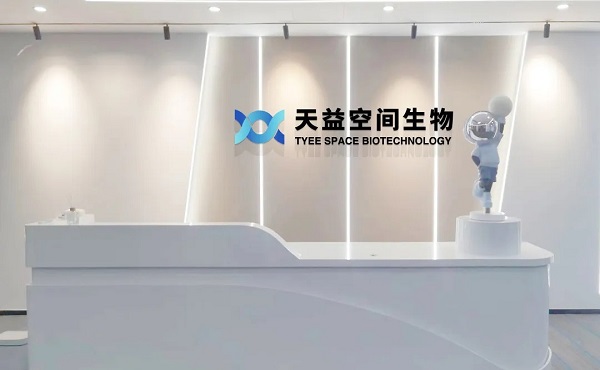
Tyee Space Biotechnology is based in the WND. [Photo/WeChat account: xinwu_wx]
It has also established one of China’s leading space microorganism repositories, preserving more than 7,000 space-bred strains. Compared with their Earth-grown counterparts, these strains show notable advantages, including higher activity and density, stronger functionality, enhanced stress resistance, antioxidant capacity and radiation tolerance.


 All rights reserved.
Presented by China Daily.
All rights reserved.
Presented by China Daily.